 Rational
 China
 Japan
 Pakistan
 Bangladesh
 South Korea
 Israel
 Palestine
 Iran
 Saudi Arabia
 United Arab Emirates
 Türkiye
 Egypt
 United Kingdom
 France
 Germany
 Ukraine
 Russia
 United States
 Canada
 Brazil
 Nigeria
 South Africa
 Australia
 India
How the Constitution of India is amended
Simple majority, special majority, and special majority plus the states — and the limit set by the “basic structure”.

The Constitution has been amended more than a hundred times since 1950. Article 368 sets out how; the procedure depends on what is being changed.
Three levels
- Simple majority. Some provisions can be changed by an ordinary law of Parliament — for example forming a new state or changing a state’s boundaries (Articles 2 to 4). These are not counted as amendments under Article 368.
- Special majority. Most amendments need, in each house separately, a majority of the house’s total membership and two-thirds of the members present and voting.
- Special majority and the states. Changes to the federal structure also need to be ratified by the legislatures of at least half the states. These include the election of the President, the powers of the Union and the states, the Supreme Court and High Courts, the lists of subjects in the Seventh Schedule, the GST Council, the representation of states in Parliament and Article 368 itself.
The steps
- An amendment bill can start in either house, but not in a state legislature.
- If the two houses disagree, there is no joint sitting: each house must pass the bill on its own.
- The President must give assent to an amendment bill passed in the proper way.
The limit: the basic structure
In the Kesavananda Bharati case (1973) the Supreme Court held that Parliament can amend any part of the Constitution but cannot destroy its basic structure — features such as the supremacy of the Constitution, democracy, secularism, federalism, the separation of powers and judicial review. Courts can strike down an amendment that does.

How the Election Commission of India works
Who the commissioners are and how they are chosen, what the Commission controls — and what it does not.
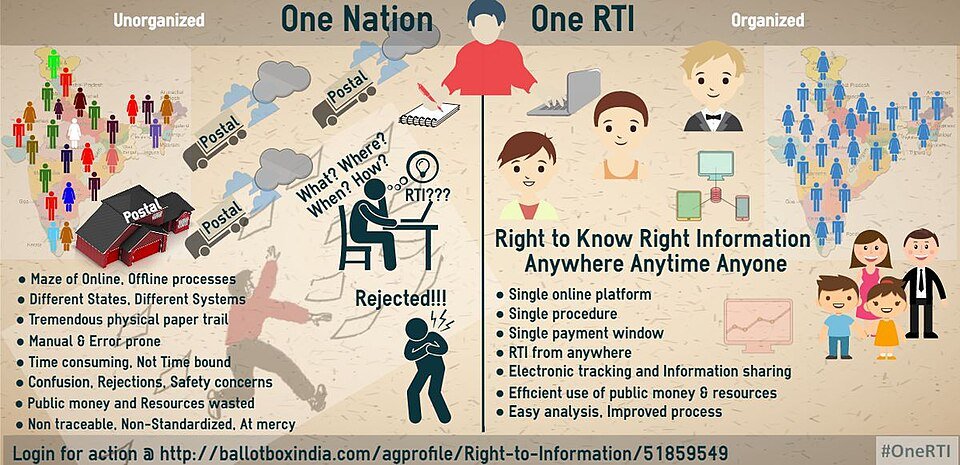
How to use the Right to Information Act
Any citizen can ask a public authority for information. How to apply, how long they have to answer, how to…

How the Supreme Court hears a case
Writ petitions, special leave, constitution benches, review and curative petitions — the routes into India’s…
Comments (0)